
How to Compare Organic Chemicals for Stability and Shelf Life
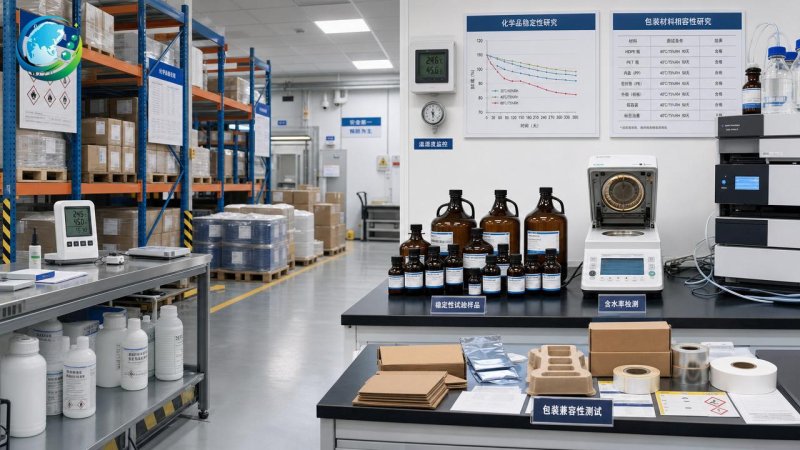
When evaluating Organic Chemicals for industrial use, stability and shelf life are not secondary specifications. They directly influence process consistency, storage safety, compliance risk, and purchasing efficiency. For technical evaluation teams, the best comparison method is not to rely on a single shelf-life statement, but to assess chemical structure sensitivity, impurity profile, packaging compatibility, storage conditions, transport exposure, and supplier quality control together. In practice, a material with a slightly higher unit price may deliver lower total risk if it remains stable longer, performs more consistently, and travels safely through international supply chains.
For technical buyers, the core search intent behind this topic is clear: how to compare candidate materials in a practical, evidence-based way before purchase or qualification. They want to know which indicators truly predict degradation, which supplier claims need verification, and how to judge whether one product will remain usable across warehousing, shipping, and production cycles. They are not looking for broad textbook definitions. They need an applied framework that supports technical review and commercial decisions.
That means the most useful discussion should focus on comparison criteria, test data interpretation, storage and packaging variables, and supplier evaluation methods. General chemistry background should remain limited. What matters most is helping readers identify which Organic Chemicals are more stable in real operating conditions, how to compare shelf-life claims fairly, and how to reduce quality drift in global sourcing. The sections below are organized around those decision points.
What Stability and Shelf Life Really Mean in Technical Procurement
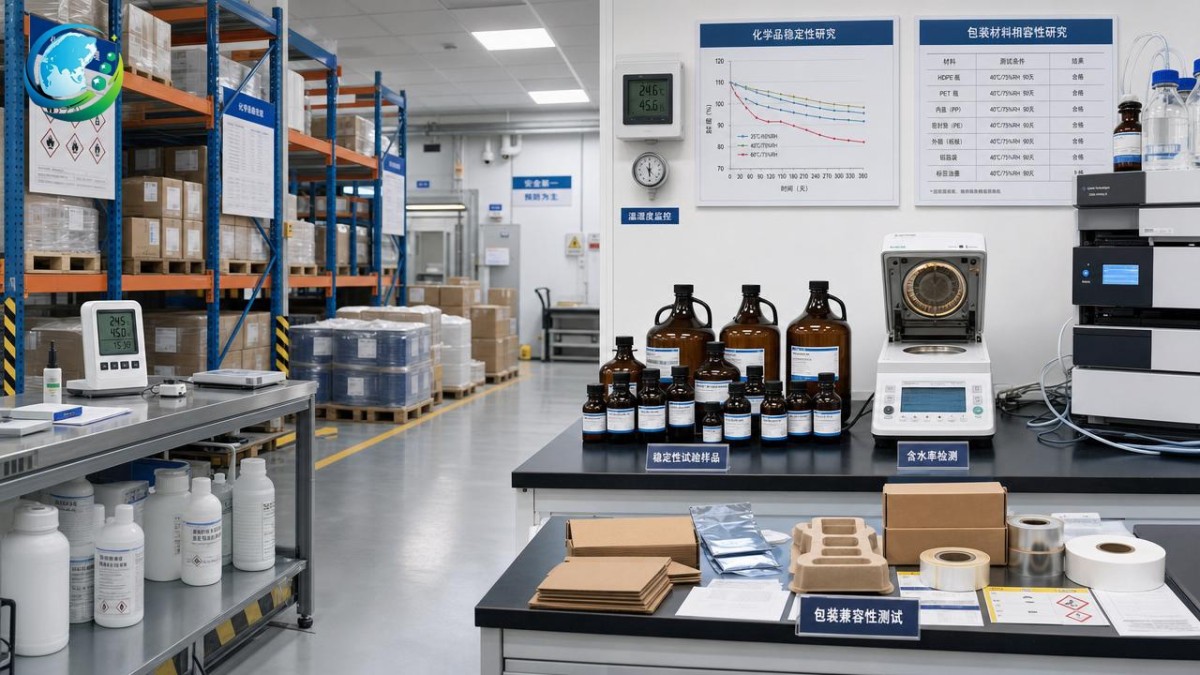
In procurement and product qualification, stability refers to how well a chemical maintains its specified properties over time under defined conditions. Shelf life is the period during which the material is expected to remain within those specifications when stored as recommended.
These two terms are related, but they are not identical. A product may remain chemically intact while still drifting outside acceptable color, viscosity, moisture, acidity, assay, or performance ranges. For technical evaluators, the practical question is whether the material remains fit for use, not simply whether it still exists in its original molecular form.
For many Organic Chemicals, functional stability depends on several variables at once. Oxygen exposure, moisture uptake, residual catalysts, trace metals, light sensitivity, and temperature fluctuations can all accelerate degradation. Even if two suppliers offer the same nominal product, their materials may perform very differently over time because of differences in purification, inhibitor control, or packaging design.
This is why shelf-life comparison must always begin with the specification context. Ask what property defines usability in your application. In coatings, it may be viscosity or color stability. In synthesis, it may be assay and impurity profile. In formulations, it may be odor, reactivity, or compatibility with other ingredients.
Which Factors Most Strongly Affect the Stability of Organic Chemicals
Technical teams comparing materials should first identify the main degradation pathways. Organic compounds commonly degrade through oxidation, hydrolysis, polymerization, thermal decomposition, photodegradation, or reaction with packaging and contaminants. The dominant pathway determines which data points matter most during comparison.
Oxidation is especially relevant for aldehydes, unsaturated compounds, solvents, extractants, and intermediates exposed to air. If a product oxidizes easily, ask whether the supplier uses nitrogen blanketing, oxygen-barrier packaging, antioxidants, or low-headspace filling. These controls often matter more than a marketing claim about long shelf life.
Hydrolysis becomes critical for esters, acid chlorides, anhydrides, and moisture-sensitive intermediates. In such cases, compare water content limits, container sealing quality, and recommended humidity control. A supplier that ships with tighter moisture management may offer a material that survives storage far better, even if assay at dispatch looks similar.
Polymerization risk matters in monomers and reactive liquids. Review inhibitor type, inhibitor concentration range, and storage temperature recommendations. If inhibitor levels are inconsistent, shelf life becomes difficult to predict. Technical buyers should also confirm whether inhibitor depletion is monitored during long storage or repeated container opening.
Light and temperature sensitivity are common but often underestimated. Dark packaging, UV-resistant containers, and controlled warehousing can materially extend usable life. Ask whether the stated shelf life assumes ambient storage, refrigerated storage, or a maximum transport temperature. Without that context, the number alone has limited value.
Impurities also deserve close attention. Trace acids, bases, metals, residual solvents, and by-products can trigger faster degradation. In many cases, a cleaner material with tighter impurity control delivers better long-term consistency than a lower-cost alternative with broader manufacturing tolerances.
How to Compare Supplier Data Instead of Just Reading the Shelf-Life Label
One of the most common mistakes in chemical sourcing is comparing products only by the shelf-life period printed on a technical data sheet. Twelve months from one supplier is not automatically better than nine months from another. The basis of the claim must be examined.
Start by reviewing the certificate of analysis and product specification side by side. Which properties are guaranteed at release, and which are expected to remain within range through the shelf-life period? A credible supplier can explain this clearly and show how the claim is supported.
Next, ask for stability study information where available. Useful data may include retained sample testing, accelerated aging studies, packaging comparison results, and historical batch trend records. Accelerated data should be interpreted carefully, because elevated temperatures can exaggerate some degradation pathways and miss others.
Batch-to-batch consistency is just as important as laboratory stability. If initial quality varies significantly, shelf-life performance will also vary. Review historical ranges for assay, moisture, color, acid value, inhibitor content, and key impurities. A narrow and controlled range usually indicates a more reliable product over time.
It is also important to compare the test methods being used. Different methods for assay, moisture, or color may produce different results. Technical evaluators should confirm that analytical methods are standardized, suitable for the product, and consistent across qualification, incoming inspection, and retained sample testing.
Finally, look beyond the product itself and review how long it will spend in the actual supply chain. If ocean freight, customs clearance, regional warehousing, and customer inventory together consume several months, a nominal shelf life may be much less practical than it appears on paper.
What Technical Buyers Should Ask About Packaging and Storage Conditions
Packaging is not merely a transport detail. For many Organic Chemicals, it is part of the stability system. A stable product in the wrong container can degrade faster than a more sensitive product packed properly. This is why packaging evaluation should be included in any technical comparison.
Begin with container material compatibility. Some organic chemicals interact with certain plastics, liner materials, gaskets, or coatings. They may extract additives, permeate through walls, or react slowly with sealing materials. Ask suppliers whether compatibility studies or long-term storage experience support the packaging choice.
Headspace control is another major issue. Products vulnerable to oxidation or moisture uptake benefit from low headspace, inert gas blanketing, or sealed systems designed to reduce repeated air exposure. Technical teams should ask how the product is filled, sealed, and protected during partial use.
Temperature exposure during shipping is equally important. If a product travels through hot ports, tropical storage, or long inland routes, actual exposure may exceed ideal warehouse conditions. Request guidance on acceptable temperature excursions and whether the supplier has transport experience in your destination market.
Repackaging is a hidden risk that should not be ignored. Material transferred from bulk containers into smaller local packages may lose the protection of the original system. If your operation requires repacking, include it in the stability assessment and confirm whether the supplier can support suitable smaller-unit packaging from origin.
Storage instructions also need practical review. “Store in a cool, dry place” is often too vague for industrial decision-making. Better guidance includes temperature range, light protection requirements, moisture control expectations, opening and resealing instructions, and recommended use period after first opening.
How to Build a Practical Comparison Framework for Qualification
To compare candidate materials effectively, technical evaluation teams should use a structured matrix instead of isolated observations. This helps convert supplier claims into a consistent qualification decision and makes cross-functional review easier for procurement, quality, and production teams.
A practical matrix can include six categories: intrinsic chemical sensitivity, initial specification quality, impurity control, packaging protection, documented stability evidence, and supply-chain suitability. Each category can then be scored according to your application risk level and storage duration.
For example, if your product will be used quickly in a controlled local plant, intrinsic shelf life may matter less than batch consistency. If your material will cross borders, sit in multiple warehouses, and feed a critical process, then packaging integrity, transport resilience, and retained property stability become much more important.
It is also useful to define acceptance criteria before supplier comparison begins. Determine which changes are acceptable during storage and which are not. A slight color shift may be harmless in one application but disqualifying in another. Viscosity drift may be manageable in blending, but unacceptable in precision synthesis.
Where possible, conduct a side-by-side retained sample program. Store samples from shortlisted suppliers under the same real or simulated conditions, then test them at defined intervals. This often reveals differences that are not visible in initial release data and provides stronger evidence than brochure-level claims.
Technical teams should also incorporate risk cost into the framework. A material with shorter practical life may lead to write-offs, emergency reorders, production delays, or process instability. Comparing total cost of use, not just unit price, leads to better decisions in long-cycle supply environments.
How Supplier Quality Systems Influence Shelf Life in Real Export Scenarios
For globally traded Organic Chemicals, stability is not determined only in the reactor or filling line. It is also shaped by the supplier’s quality system, document control, logistics discipline, and responsiveness when conditions change. This is especially important for buyers managing cross-border procurement risk.
A dependable export supplier should be able to show more than a specification sheet. Look for batch traceability, retained sample management, packaging control procedures, warehouse standards, and change notification practices. These systems help ensure that shelf-life claims remain meaningful across repeated orders.
Consistency of sourcing matters as well. If the supplier works with stable manufacturing partners and strict qualification controls, batch variation is easier to manage. If sourcing changes frequently without transparent communication, technical comparability over time becomes difficult, even when the product name stays the same.
Global supply experience also adds value. Export packaging design, documentation accuracy, and route planning can affect how well a chemical arrives after long transit. A supplier familiar with international handling requirements is better positioned to recommend suitable packaging formats and realistic inventory planning windows.
Qingshan Industrial Co., Limited operates as a professional chemical supplier and global export partner with a focus on chemical products export, global sourcing, and international supply chain solutions. For technical buyers, this type of model can be valuable because it combines access to manufacturing resources with quality-oriented supply coordination.
With established partnerships across China, strict quality management, and attention to stable supply capacity, a supplier in this position can help customers compare materials not only by price and availability, but also by consistency, packaging suitability, and practical shelf-life performance in export conditions.
Common Mistakes to Avoid When Comparing Organic Chemicals
One frequent mistake is assuming that a longer listed shelf life always means a better product. In reality, the usefulness of that number depends on the test basis, storage assumptions, packaging format, and your own application requirements. Always compare the context behind the claim.
Another mistake is ignoring the opened-container scenario. Many materials are stable when factory sealed but degrade quickly after first use. If your process consumes drums slowly or repeatedly opens containers, ask for guidance on in-use stability and handling controls after opening.
Technical teams also sometimes overfocus on release assay and underfocus on impurity evolution. A material can start with acceptable assay yet form problematic degradation products over time. If downstream performance or compliance is sensitive, impurity trend review is essential.
It is also risky to separate technical review from logistics planning. A chemical may appear stable on paper, yet become impractical when actual shipping lead time and customer inventory cycles are considered. Comparison should reflect the full landed timeline, not just factory storage conditions.
Finally, avoid making decisions without documenting use conditions internally. If one department assumes air-conditioned storage and another stores product near heat sources, shelf-life conclusions may become unreliable. Internal handling discipline is part of the comparison outcome.
Conclusion: Compare Stability by Usefulness, Not by Label Alone
To compare Organic Chemicals for stability and shelf life, technical evaluators should move beyond surface-level data and focus on real use performance. The most reliable choice is usually the one supported by consistent specifications, controlled impurities, suitable packaging, realistic storage guidance, and a supplier capable of maintaining those conditions through export and delivery.
In practical terms, the best comparison method combines chemistry, packaging, logistics, and supplier quality review. Ask how the material degrades, what properties matter most in your application, how the shelf-life claim is supported, and whether the product can remain within specification throughout your actual supply chain.
When technical teams use this structured approach, they reduce qualification risk, improve inventory confidence, and make better long-term sourcing decisions. Stability is not just a laboratory attribute. It is a supply-chain performance indicator, and evaluating it correctly leads to safer storage, more predictable production, and stronger procurement outcomes.