
What Purity Specs Matter Most When Sourcing Fine Chemicals?
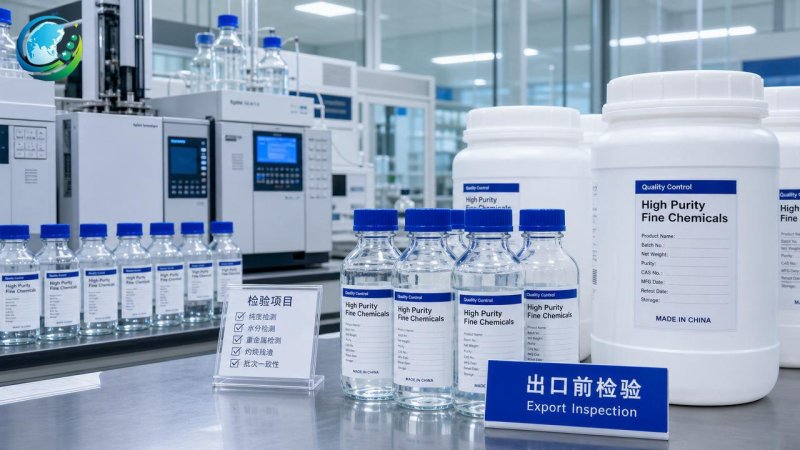
When sourcing Fine Chemicals, purity specifications are more than a technical detail—they directly affect product performance, regulatory compliance, and supply reliability.
A clear review process helps reduce quality disputes, batch inconsistency, and hidden cost from rework, rejected goods, delayed customs clearance, or unstable downstream results.
For global sourcing, the most useful approach is to compare Fine Chemicals through a structured set of purity specs, documents, and testing expectations before shipment.
Why purity specs matter when evaluating Fine Chemicals
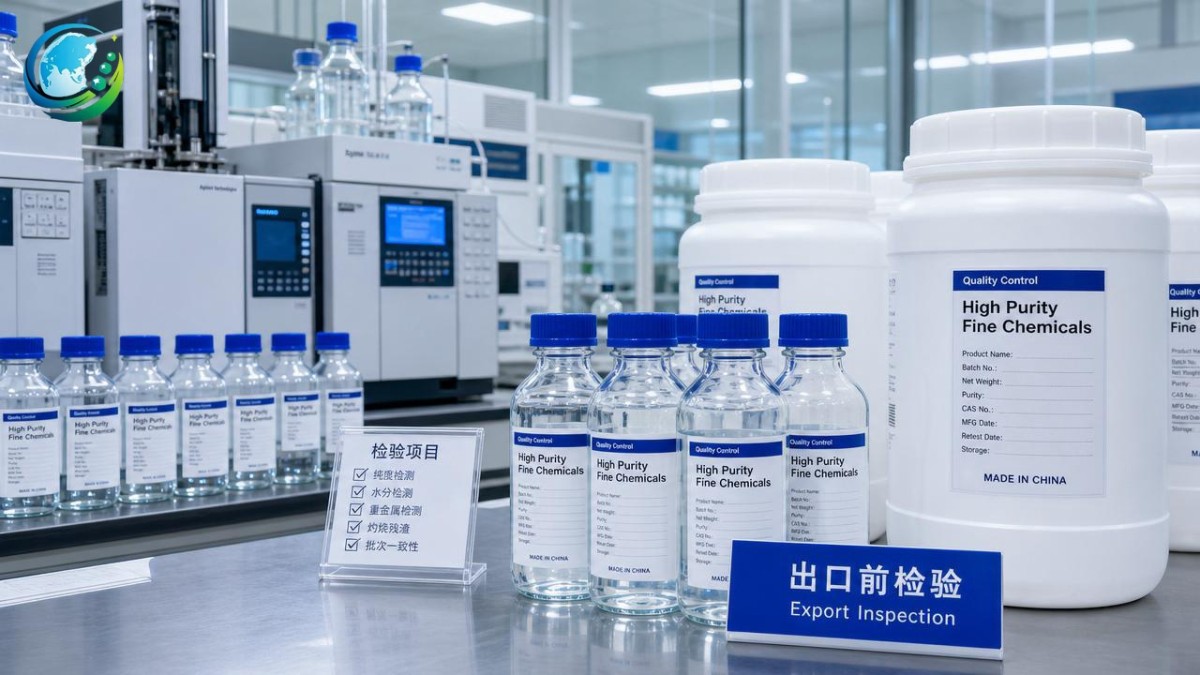
Purity is not a single number. In Fine Chemicals, it includes assay, impurity profile, moisture, trace metals, solvent residues, appearance, and batch-to-batch consistency.
A supplier may quote high purity, yet critical impurities can still exceed acceptable limits for coatings, electronics, pharma intermediates, agrochemical synthesis, or laboratory applications.
That is why Fine Chemicals should be reviewed against application needs, analytical methods, storage conditions, packaging integrity, and export documentation together.
Qingshan Industrial Co., Limited supports global chemical supply through stable sourcing resources, quality control coordination, and export service for international shipments.
Core purity checks to review before placing an order
Use the following points to compare Fine Chemicals more accurately and avoid relying only on a headline purity percentage.
- Confirm assay basis clearly, such as area percent, dry basis, or as-is basis, because the same Fine Chemicals can show different purity values under different calculations.
- Check the identified impurity profile, not only total impurities, since one trace by-product may strongly affect reaction selectivity, color stability, or final product compliance.
- Review moisture or water content carefully, especially for hygroscopic Fine Chemicals, because water can reduce shelf life, alter concentration, or trigger side reactions.
- Verify residual solvent limits against the intended application, because Fine Chemicals used in regulated or sensitive processes often require tighter solvent control.
- Evaluate inorganic residue, sulfated ash, or non-volatile matter where relevant, since these indicators reveal contamination from production, drying, handling, or packaging.
- Request trace metal data when Fine Chemicals are used in catalysts, electronics, plating, or high-purity synthesis, where ppm-level metals can disrupt process performance.
- Confirm color, clarity, particle size, or melting range specifications, because physical properties often indicate purity stability and practical usability during manufacturing.
- Compare analytical methods, such as HPLC, GC, titration, ICP, or Karl Fischer, because different methods may produce non-equivalent purity results.
- Review certificate of analysis consistency across multiple lots, since stable Fine Chemicals supply depends on repeatable quality, not one strong sample result.
- Check packaging, sealing, and transport conditions, because oxygen, light, heat, or humidity can reduce actual purity before Fine Chemicals arrive at destination.
Key purity indicators and what they tell you
How purity priorities change by application
Fine Chemicals for synthesis and reaction processes
For intermediates and reaction inputs, the impurity profile often matters more than a very high overall assay number.
Closely related isomers, residual catalysts, or water can reduce yield, create side products, and increase purification cost downstream.
Fine Chemicals for coatings, inks, and specialty formulations
Color, odor, residual solvent, and storage stability become critical in these applications, even when assay appears acceptable on paper.
Low-level impurities can change appearance, drying behavior, compatibility, or long-term formulation performance in the finished system.
Fine Chemicals for electronics and high-purity uses
Trace metal control is often the top priority. Parts-per-million contamination can affect conductivity, deposition quality, and process reproducibility.
In these cases, packaging cleanliness, dedicated production lines, and contamination prevention are as important as certificate values.
Fine Chemicals for regulated or export-sensitive supply chains
Document alignment matters greatly. Specifications, COA format, SDS, labeling, and transport declarations should match the supplied material exactly.
Even compliant Fine Chemicals may cause border delays if document wording, batch data, or hazard information is incomplete or inconsistent.
Commonly overlooked issues that create sourcing risk
Confusing technical grade and application-fit quality
Some Fine Chemicals meet a general grade but still fail in specific processes. Always match purity specs to actual end use.
Ignoring stability during storage and transit
A passing factory result does not guarantee arrival quality. Heat, moisture, and light exposure may lower effective purity before use.
Relying on one batch only
One qualified lot cannot prove stable supply. Fine Chemicals should be checked across several batches to verify long-term consistency.
Accepting unspecified test methods
Without method details, purity comparisons become unreliable. Fine Chemicals from different sources may look similar but be tested differently.
Overlooking pack size and headspace effects
Reactive Fine Chemicals can degrade faster in unsuitable container sizes or with excess air exposure after repeated opening.
Practical steps for a stronger evaluation process
- Define must-have purity specs by application, including assay, critical impurities, moisture, residual solvents, and trace metals where needed.
- Request recent COAs from multiple lots and compare variation, not just the best reported data.
- Align on analytical methods before order confirmation to avoid disputes after arrival testing.
- Review packaging materials, shelf life, storage recommendations, and shipping controls for sensitive Fine Chemicals.
- Use pre-shipment verification or retained samples when the chemical will enter critical or regulated production.
- Assess supplier export capability together with product quality to support stable international delivery.
FAQ about sourcing Fine Chemicals by purity specifications
Is the highest purity always the best choice?
Not always. The best Fine Chemicals are those whose purity profile fits the application, process sensitivity, and compliance needs at a workable cost.
Which document is most important?
The COA is essential, but it should be reviewed together with specification sheets, SDS, test methods, and packaging details.
How many batches should be checked?
At least several recent lots give a better view of consistency. For critical Fine Chemicals, trend review is more useful than a single sample.
Final takeaway for selecting Fine Chemicals with confidence
The most important purity specs for Fine Chemicals depend on use, but assay alone is never enough for sound sourcing decisions.
A stronger review includes impurity profile, moisture, residual solvents, trace contaminants, test methods, packaging, and consistency across lots.
Qingshan Industrial Co., Limited combines chemical export experience, supply chain coordination, and quality-focused sourcing support for global chemical requirements.
Start with a written purity checklist, compare supplier data line by line, and confirm documentation before shipment to source Fine Chemicals more reliably.