
Chemical Solvents vs Alternatives: When the Lower Price Costs More
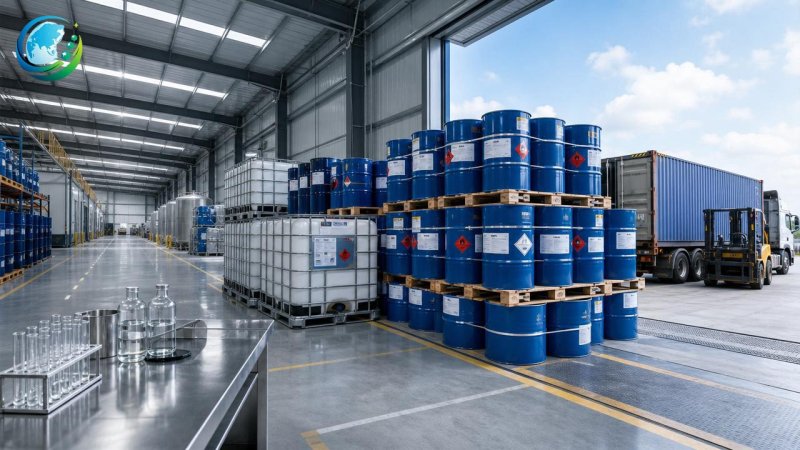
When sourcing Chemical Solvents, the lowest unit price can be misleading. For distributors, agents, and wholesalers, hidden costs often appear in quality inconsistency, compliance risks, delayed shipments, and customer claims. This article explores when lower-cost solvents create bigger downstream losses, and how reliable alternatives, backed by stable supply and export expertise, can deliver better long-term value in the chemical trade.
Why do low-priced Chemical Solvents often become expensive later?
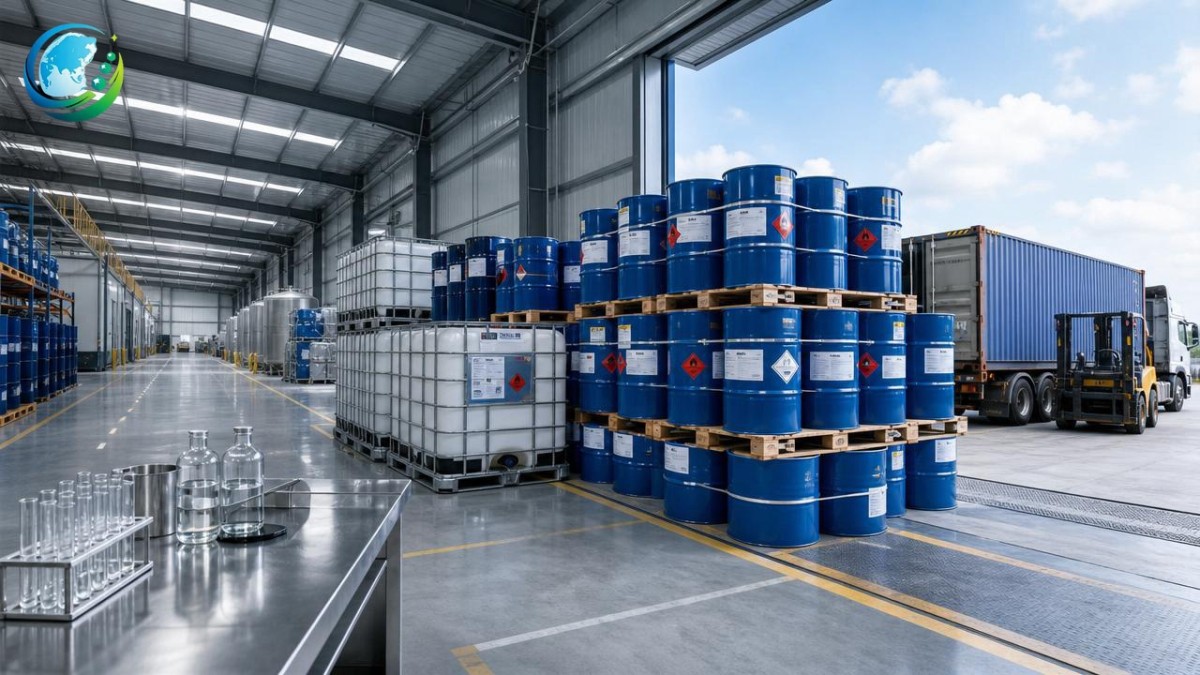
In the chemical trade, the invoice price is only one part of the total cost. A solvent that looks cheaper at purchase can create larger losses after it enters storage, repacking, transport, blending, or end-customer production.
For distributors and agents, the main risk is not only product performance. It is also the chain reaction caused by unstable batches, incomplete documentation, packaging failures, and shipping interruptions. These issues directly affect customer retention and resale margin.
Chemical Solvents are often purchased for repeat industrial use. Buyers therefore need to evaluate consistency, solvency behavior, purity profile, moisture level, odor, flash point, and compatibility with customer processes, not just nominal specification.
- A lower price may come from relaxed quality control, which increases the chance of off-spec cargo and customer complaints.
- A supplier may offer aggressive pricing but fail to maintain stable lead time, causing missed sales windows and urgent replacement sourcing.
- Incomplete export support can delay customs clearance, document approval, or dangerous goods handling, adding unexpected operational cost.
- Poor packaging integrity can result in leakage, contamination, relabeling work, and financial exposure across the logistics chain.
This is why professional sourcing of Chemical Solvents should be based on total delivered value. For global distributors, a reliable supply partner reduces friction across procurement, compliance, logistics, and after-sales support.
What hidden costs matter most in chemical distribution?
The following comparison helps clarify when a lower quoted price becomes less competitive in real business conditions. It is especially relevant for traders serving coatings, inks, cleaning chemicals, agrochemical formulations, and industrial processing customers.
The table shows a common pattern in Chemical Solvents trading: a small price gap per ton can quickly disappear once claims handling, replacement supply, and delayed resale are included in the calculation.
How should distributors compare Chemical Solvents with alternative options?
Not every customer needs the same solvent grade or sourcing strategy. In some cases, a standard industrial solvent is suitable. In others, a substitute with better safety, lower odor, or improved regulatory acceptance creates stronger downstream value.
Alternatives do not always mean replacing one chemistry with another without testing. They may include higher-stability grades, controlled-origin material, customized packaging, blended options, or supply programs designed around customer application requirements.
Which comparison criteria are practical in real procurement?
- Performance fit: solvency power, evaporation rate, residue behavior, and substrate compatibility should match the intended industrial use.
- Handling profile: flash point, odor, toxicity considerations, and storage class influence warehouse and transport decisions.
- Supply risk: production source diversity, export experience, and lead-time reliability matter for long-term customer service.
- Commercial flexibility: packaging sizes, labeling support, sampling, and documentation can affect market responsiveness.
For distributors evaluating Chemical Solvents and alternatives, the goal is not to buy the cheapest drum. The goal is to deliver an acceptable technical and commercial result every time the customer reorders.
A practical comparison table for sourcing decisions
This table is designed for agents and wholesalers who need a fast screening framework before requesting samples or final quotations for Chemical Solvents.
A reliable alternative is especially valuable when the end customer prioritizes repeatability, regulatory clarity, or stable manufacturing output. In those cases, a modestly higher price can protect both margin and reputation.
Which application scenarios make solvent quality more sensitive?
Some industrial uses are more tolerant of variation, while others react immediately to changes in solvent profile. Distributors should identify sensitivity early, because the wrong sourcing decision usually surfaces at the customer site, not at the purchase desk.
Higher-risk application scenarios for inconsistent Chemical Solvents
- Coatings and inks, where evaporation balance, drying time, and film appearance can shift with small composition differences.
- Cleaning formulations, where residue, odor, and material compatibility influence the final user experience and rework rate.
- Agrochemical and specialty blends, where impurities or moisture may affect stability and shelf-life expectations.
- Repacking and private-label distribution, where packaging consistency and traceable documents matter as much as the solvent itself.
In these scenarios, Chemical Solvents should be reviewed in the context of the final formulation, transport route, and customer handling conditions. A good quotation is not enough if the product cannot perform consistently after delivery.
When can alternatives create better market positioning?
Alternatives can support market expansion when your customer requests lower odor materials, more controlled packaging, stronger document support, or a supply source with better export discipline. These requests are common in cross-border distribution.
Instead of treating alternatives as a pure substitution exercise, experienced distributors use them to reduce claim frequency, enter more demanding customer accounts, and improve reorder confidence.
What should buyers check before ordering Chemical Solvents?
A disciplined procurement checklist helps avoid expensive mistakes. It also makes supplier discussions more efficient, especially when comparing multiple offers from different origins or production bases.
Procurement checklist for distributors, agents, and wholesalers
- Confirm technical fit by checking key product characteristics relevant to the customer application, not only a general product name.
- Request routine documentation such as COA, SDS, packing information, and transport-related data needed for export handling.
- Verify packaging type, sealing method, labeling language needs, and pallet or container loading details before booking.
- Assess lead time stability, not just the first shipment promise. Repeat supply reliability is what protects long-term contracts.
- Ask about alternative solutions if the original Chemical Solvents option has supply volatility, compliance uncertainty, or a history of inconsistent batches.
This checklist is useful for both spot business and framework cooperation. It helps buyers compare commercial offers on a professional basis instead of reacting only to the lowest number in the quotation.
How supply chain strength changes the buying outcome
Qingshan Industrial Co., Limited focuses on chemical products export, global sourcing, and international supply chain solutions. For buyers of Chemical Solvents, this matters because the sourcing outcome depends on more than one transaction.
By working with long-term manufacturing partners across China and applying strict quality management, Qingshan Industrial can support stable supply capacity, competitive commercial terms, and practical coordination for global customers with different market needs.
For distributors, this means clearer supplier communication, better control over shipment preparation, and more confidence when planning repeat orders or customer-specific supply programs.
How do compliance and export details affect solvent cost?
In international trade, Chemical Solvents are not judged only by chemical performance. Storage class, labeling requirements, transport status, and destination-country document expectations can all affect final cost and delivery timing.
A lower-price cargo may become problematic if paperwork must be corrected repeatedly, if dangerous goods handling is not prepared properly, or if destination customers need more complete technical support than the supplier can provide.
Common compliance points that buyers should review
- Safety data availability and consistency with shipped product information.
- Packaging suitability for marine shipment, warehousing, and local distribution handling.
- Labeling and document alignment to reduce customs or port-side clarification requests.
- Traceability between batch documentation and physical cargo for claim investigation if needed.
These items are not administrative details. They are cost-control tools. Strong export execution can reduce demurrage, avoid relabeling work, and improve delivery predictability for customers buying Chemical Solvents across borders.
FAQ: common questions when buying Chemical Solvents
How should I evaluate Chemical Solvents beyond price?
Start with the customer application, then check batch consistency, documentation completeness, packaging reliability, lead time, and supplier response speed. A solvent with a higher quoted price may still be the lower-risk choice over several delivery cycles.
Are alternative solvents always more expensive?
Not necessarily. Some alternatives reduce total cost by lowering waste, minimizing complaints, or simplifying export and storage handling. The right comparison is total delivered and usable value, not just price per metric ton.
What are the most common mistakes distributors make?
The most common mistakes are assuming all Chemical Solvents with the same name behave the same, overlooking packaging and document quality, and failing to validate repeat-order stability. These errors often appear only after the product reaches the end customer.
When should I request a customized sourcing solution?
You should request one when your market requires specific packaging, recurring shipment schedules, mixed product sourcing, or support for compliance-sensitive customers. Customized coordination is especially useful for agents serving multiple industries with different technical expectations.
Why choose us for Chemical Solvents sourcing and export support?
Qingshan Industrial Co., Limited supports global buyers with professional chemical export services, supply chain coordination, and access to long-term manufacturing partnerships in China. This structure helps distributors manage both price pressure and operational risk.
If you are comparing Chemical Solvents, planning an alternative solution, or trying to stabilize repeat supply, our team can support practical discussions based on your market and customer application.
- Parameter confirmation for application-sensitive solvent selection.
- Quotation comparison based on total procurement and delivery considerations.
- Lead time and shipment planning for repeat orders or urgent export schedules.
- Packaging, labeling, and documentation coordination for international trade needs.
- Sample support and customized sourcing discussions for alternative Chemical Solvents options.
For distributors, wholesalers, and agents, the right solvent decision is rarely about price alone. It is about protecting margin, reducing claims, and keeping customers confident in every shipment. Contact us to discuss product selection, delivery cycle, compliance questions, sample arrangements, and quotation planning for your next Chemical Solvents project.